
Starting the Growing Season Right Behind the Combine!
There are three processes that must be functioning at a high level to be profitable in the next cropping season.
- The soil must breathe, (oxygen movement and root-zone respiration)
- Water must infiltrate and move efficiently, (a stable soil structure is critical)
- Crop residue must be converted, (this is the most profitable plant nutrition available for the next crop)
The products mentioned below are designed to support these processes.
Dry Humic Acid
Builds carbon in the profile that improves nutrient use efficiency which directly relates to farming for profit.
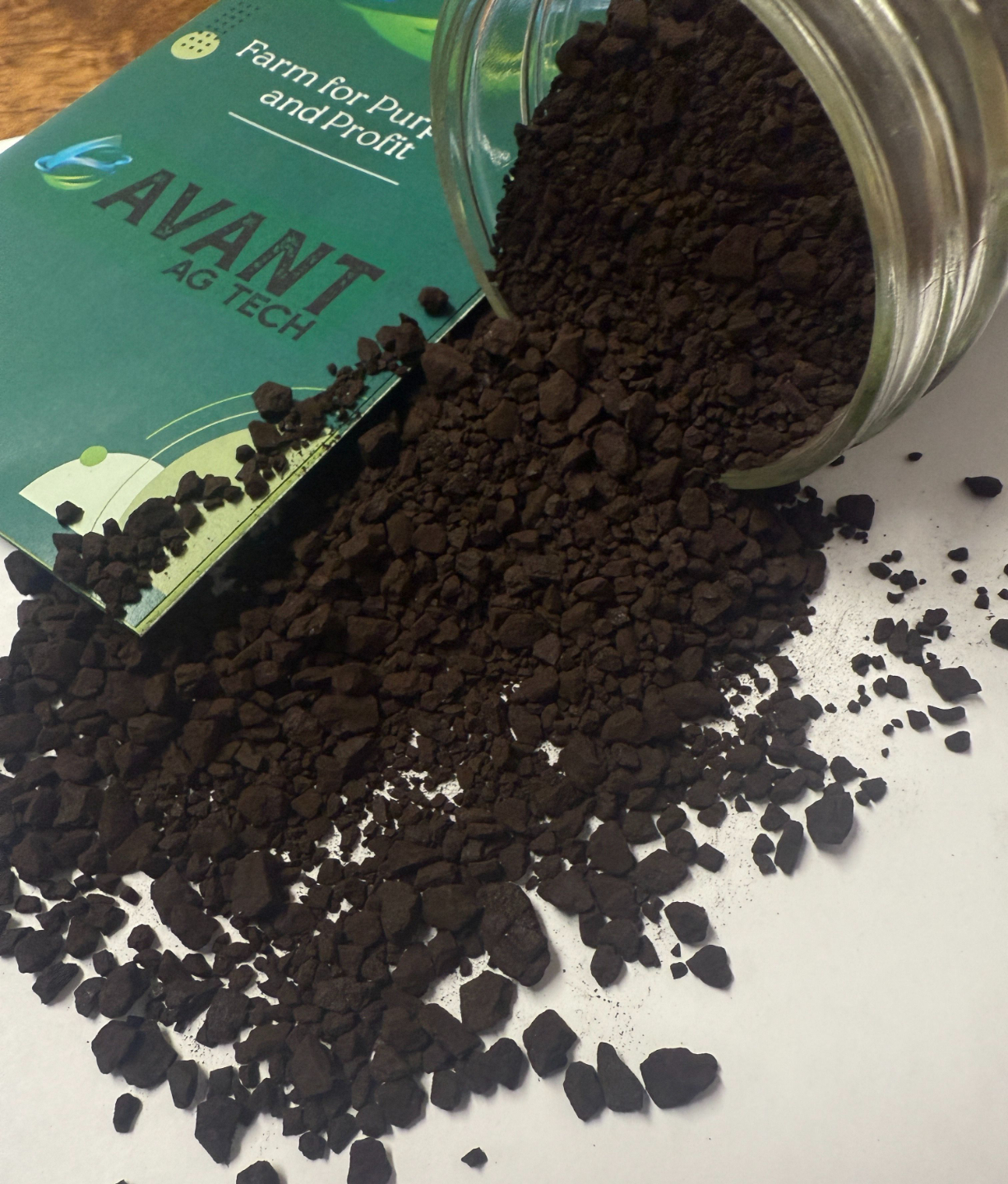
Dry humic acid is a concentrated source of humic substances—stable, carbon-based compounds created when plant material and microbial byproducts decompose and chemically transform over long timeframes.
It’s not “fertilizer” in the traditional sense. It’s more like a soil efficiency input that strengthens the root-zone environment so the nutrients you apply are held, cycled, and utilized more effectively.
Most dry humic products are derived from naturally occurring organic deposits such as leonardite (an oxidized form of lignite). These deposits formed as massive plant material accumulated, decomposition slowed (often in low-oxygen environments), and time + geology transformed that organic matter into humic-rich carbon.
In other words, dry humic is concentrated, stabilized carbon chemistry harvested from deposits that took a very long time to form—then processed into a consistent dry form for practical field use.
What Dry Humic Does In The Soil
At Avant, the main reason we focus on the heavy use of dry humic is it's a cost effective way to drive up the long-term profits for our producers. It holds and stores more nutrients and water, more effective exchange capacity, and improves the nutrient cycling system which will equip our producers to use substantially less inputs in future cropping seasons.
Dry Humic Helps Build the "Carbon Capacity" in the Root Zone
Humic substances are part of the soils stable carbon fraction. The result of improved carbon function is:
- Improved Aggregation (soil structure)
- Improved Aeration and Water Movement
- Improved biological habitat and activity
- Improved nutrient release
- Reduced nutrient loss

Humic Helps to Improve Nutrient Use Efficiency
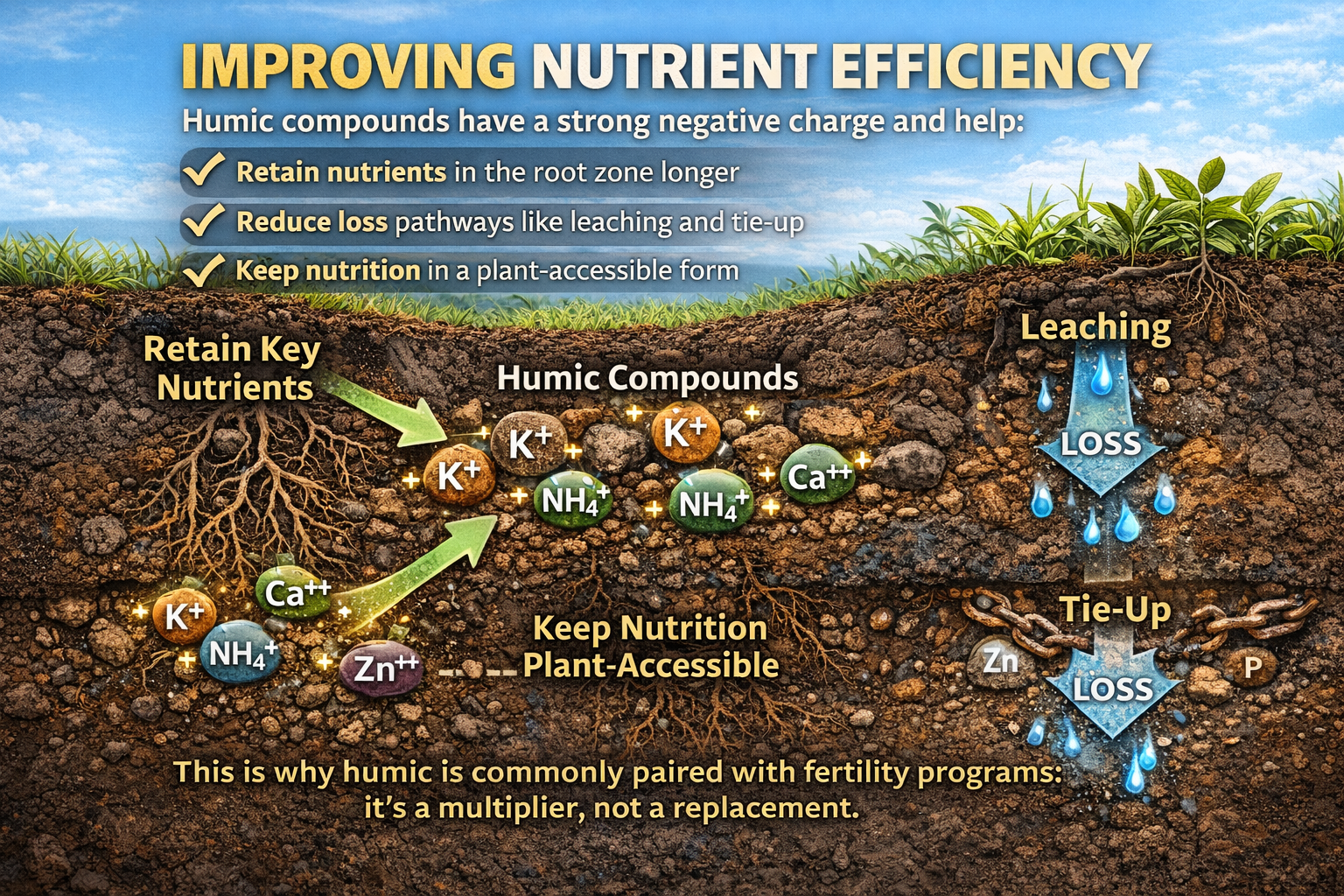
Humic compounds have a strong negative charge and interact with soil surfaces in ways that help:
-
retain key nutrients in the root zone longer
-
reduce loss pathways (like leaching, volatilization, denitrification, and tie-up)
-
keep more nutrition in a plant-accessible form
This is why humic is commonly paired with fertility programs: it’s a multiplier, not a replacement. And multipliers are what make farmers able to put on less inputs and make more profit!
Humic Supports the Critical Work of the Biology
Soil biology runs the nutrient cycle. Dry humic helps support microbial function by improving:
-
habitat (aggregation + moisture balance)
-
access to energy/carbon substrates
-
overall root-zone livability
When biology improves, nutrient availability becomes more consistent and less dependent on “insurance” application rates.

Dry Humic Summary
Today farmers are investing heavily in nutrition inputs. Unfortunately, after years and years of producing and producing, many soils are tired. Many soils are struggling to:
-
hold nutrients,
-
cycle nutrients, and
-
deliver nutrients to roots consistently.
Dry Humic is one of the fastest and most effective ways to build the carbon that makes all three work.
Click the link below to connect with Avant for recommended application rates, prices, and expectations.